Jordan Mead
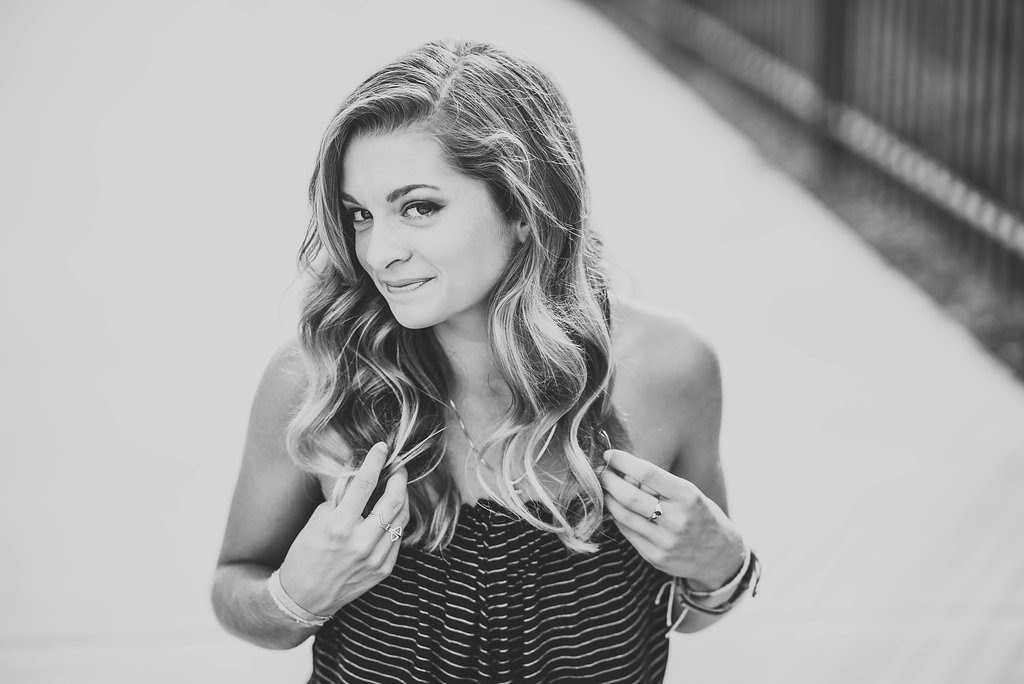
I am a journalist with a passion for giving others a voice through honest, diligent and excellent reporting. I earned my Bachelor´s of Arts in journalism and Spanish with a minor in Latin American Studies at Illinois State University.
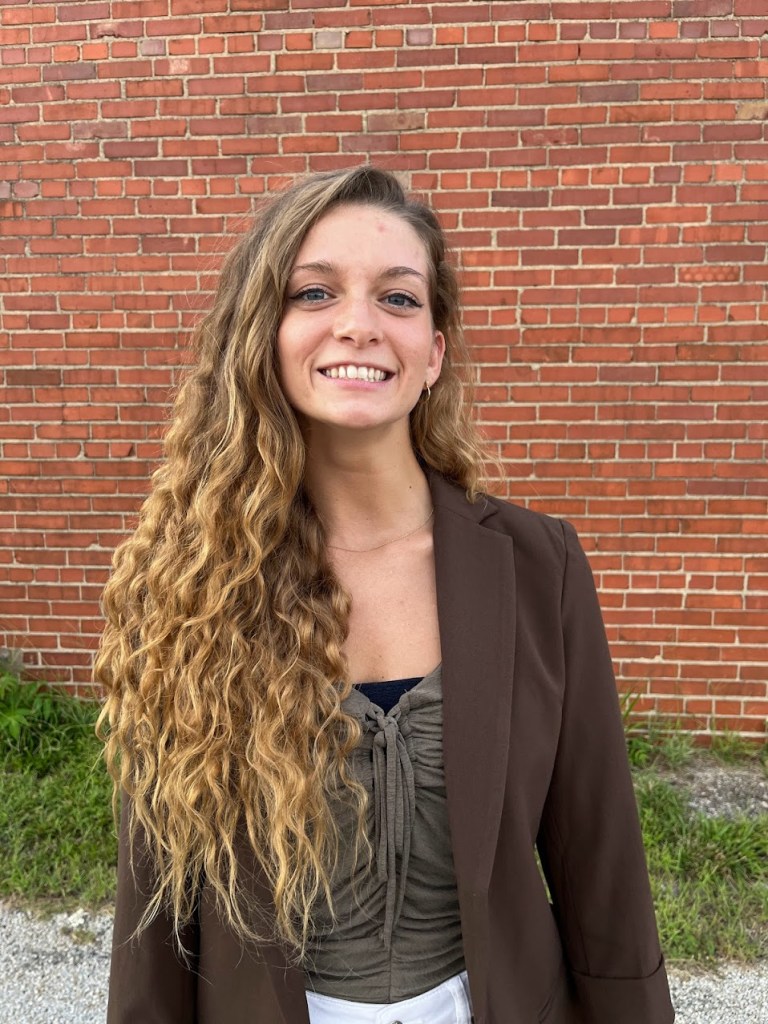
While earning my undergraduate degree, I worked as a reporter for NPR affiliate stations WGLT in Normal, Illinois and WCBU in Peoria, Illinois. I also was a Features Reporter and a News Editor and for The Vidette Newspaper at Illinois State. Additionally, I was a Multimedia Journalist and Reporter for TV10 News at ISU.
My long term goals include earning my master’s degree in International Relations, working for a news outlet, traveling and connecting with those in Spanish-speaking communities, and applying all national and international experiences I have to my journalism. I hope to grow in my political awareness during my education and uplift unheard voices in our world.
Latest from the Blog
The robustness of local journalism in a pandemic
Bloomington-Normal journalists share how they grew to love journalism more while managing the demands of reporting during a pandemic.
The severity of the COVID-19 pandemic took the world by surprise and permanently impacted billions for nearly two years, and journalists from local to international platforms had to adjust covering the COVID-19 pandemic while also living through it.
For many local journalists, the impact of COVID-19 did not deter them from their dedication to honest and credible reporting, and the passion for journalism remained solid.
WGLT news director Charlie Schlenker said when the shutdown happened, he knew it was going to be a defining moment in his career.
Schlenker said while he has experience covering large stories such as the 9/11 attacks and the challenger disaster, covering the COVID-19 pandemic is the most draining and prolonged story he has covered. He said it is always a struggle to find balance as a journalist including in the present age with COVID-19.
“Even though it’s your story too, and the pandemic is affecting you, you just distance yourself from it, and it helps a little bit,” Schlenker said.
WGLT content director Ryan Denham said that the pandemic was not as tough on him as others because throughout the shutdown, he was able to find meaning through his work as a journalist.
Denham said while it was difficult on times reporting on daily COVID-19 deaths, hospitalizations and mandates from a work-from-home environment, his love for journalism increased as a result of the pandemic.
“I think generally speaking, it was one of our finest hours working at WGLT and the reporting that we did. I think the community really responded to it, generally, in a positive way,” Denham said. “I think people really relied on us to put stuff in context and tell them what the true trajectory of it was.”
Being a journalist requires diligence. Entering the world of journalism requires an adjustment to meeting hard deadlines while writing excellent and accurate stories.
Ashley Daniels is an Illinois State University journalism student and WGLT, TV-10 and the Vidette student reporter. Daniels said entering the field of journalism is worth the challenges of pursuing journalism during unpredictable times
“It put me in a position to stop and understand the time that everybody’s in and that I’m not the only journalist struggling to find a good story or just a story in general. However, it did give me a chance to evaluate what kind of journalist I would like to be,” Daniels said. “I feel that a lot of times as a journalist, you’re so busy writing that you’re not stopping to think about what kind of stories you would like to write about that are impactful to you and to others.”
Daniels also said since she began her journalism career doing sports and entertainment anchoring at Lakeland College five years ago, it can be easy to lose touch of why she started. At the same time, she said since she came to Illinois State, she realized the importance of being a voice for the student body, and she hopes to continue growing into a devoted journalist that shares others’ stories wherever journalism takes her.
“Coming here, the inspiration has always been to listen to others and be around to listen to others. Not necessarily advocating because as a journalist you can’t be biased, but I feel like it’s important to hear the voices as you use them because as a journalist, you’re the voice for the people, and the people know you hear what they’re saying,” Daniels said.
Former Pantagraph reporter Paul Sweich devoted over 30 years to local journalism, covering anything from plane crashes to fires to health stories. Sweich left the Pantagraph in December 2020 because for him, it was time to move on.
Sweich said whether in a pandemic or not, being a journalist comes with many challenges. In his 37 years of working as a journalist, he was threatened more than once, had his notebook grabbed and endured extreme circumstances such as covering a protest and being drenched in sweat from the summer heat.
“One of the things that was difficult in the last couple of years was some people said they hated us when they had no idea what good journalists do. More people were saying that we didn’t matter,” Sweich said.
Still, Sweich said he was continually reminded the importance of local journalism throughout his career even in the difficult moments. As the world continues to navigate the impact of COVID-19, Sweich said people must continue to invest in journalism.
“People need to read their newspapers, listen to their local radio stations [and] listen to their local TV stations. Real journalists that make a difference – that’s who they need to listen to,” Sweich said.
For experienced journalists like Sweich, Schlenker and Denham, it is the defining moments that make it all worth it, whether that means contextualizing community fears and assessing the validity of threats to talking to grieving individuals or convicted civilians that still have powerful stories to tell.
“All politics is local. All stories are local. You define the community with your coverage area, with your service area. So, you serve those people. It’s community service and community building, and something that’s really really important,” Schlenker said.
Denham said people need information to make decisions about themselves, where they live, which careers they pursue and which path they chose in life. Denham said while city government sites and social media provide some information, local journalism is the one critical source of information the public depends on whether in a pandemic or not.
THE ULTIMATE QUESTION I WOULD ASK MYSELF
INCREASE IN HOUSING COSTS; WHY A COLLEGE STUDENT SHOULD CARE
To fully convey who I am in a story or report about my life, my most important question I would ask myself is, “How has your faith and relationship with God grown in the last six years of your life?”
This is the most important question anyone could ask me for a handful of reasons. My faith is the one aspect of my life that regardless that of what happens I will never lose. I believe that having a relationship with God is not an easy thing to do, and this idea of “automatic perfectionism” that many expect of believers is, in fact, unattainable because we’re all human.
When I was 14 years old and chose to put God first in all that I do for the rest of my life, I must vulnerably say walking with God is not a straight road that goes up for people; it is a curvy road with potholes in the pavement, and the road itself is sitting on the side of a steep mountain. Following God, to summarize that analogy, does not make your life perfect like many believe it will. Following God is realizing that he is perfect even when your life isn’t and even when you’re human.
This has taken me years to learn, and I am still learning it; in this process of learning and walking with God, I can say that while I’ve honestly hit rock bottom at times, my love for God and my realization of who he truly is – not a genie in a bottle but a loving father who listens and gives me grace – has transformed beyond what my younger self would have imagined.
If you want to know who I am, ask me about my relationship with God.
It’s becoming harder to find affordable homes in the United States compared to last year’s rates. Many Americans are in search for larger homes given the switch to more remote lifestyles since the start of the COVID-19 pandemic.
Money Magazine said that homes under $200,000 make up only 20% of house market sales, and higher end home sales in the $500,000 to $1,500,000 range have significantly increased. For these reasons, many Americans are choosing to rent instead.
In addition to the increase in housing prices, CNBC said mortgage rates increased to 3.3% from 3.23% for 30-year fixed mortgage rates.
While I am personally not in the position to purchase a home for a minimum of three more years, these reports catch my eye. Choosing which parts of the United States to live in will ultimately depend on where I become employed, but the increased cost to live in metropolitan areas and the increase in mortgage rates and overall cost of homes is overwhelming to think about.
From a college student’s perspective, the idea of purchasing a home of my own feels like a far-off concept and something that I don’t need to worry about. However, it is important to be in-the-know of increases in the cost to live because this impacts my family, some of my friends and will eventually impact me.
It all feels incredibly daunting to picture myself one day buying a home, but I do feel it’s important for college students to be aware of changes in the housing market because at some point, most college students will purchase a home in their lifetime.
MY BIGGEST ADJUSTMENT SINCE RETURNING TO IN-PERSON CLASSES:
TO ALL MY OVERTHINKERS OUT THERE,
Since returning to Illinois State University for fall semester courses, I have noticed several differences in how I approach my courses and working in-person. The largest adjustment that I have made is planning-ahead for commuting to school and walking across campus to my courses.
During the 17-month period of online classes only for ISU students, I completed all of my daily news meetings for my position with WGLT at home, and every class was held over zoom or asynchronous through ISU’s virtual portal.
I was used to not planning ahead to allocate time for driving, and I therefore had more time to rest. Now, I must wake up and plan to leave my house around 45 minutes before my classes, shifts and meetings each day given the long drive and walk across campus.
While I appreciated the additional sleep that I gained during the 17 months of online only classes, it is worth it to me to leave my house 45 minutes early to arrive to work and classes this semester. I missed the ability to interact with my professors and classmates more than I miss the additional sleep, and I enjoy the time to decompress during my drive to campus each day. All in all, I am thankful to be back in-person.
We’ve all grown up learning about “stage fright.” We’ve all spent hours rehearsing speeches and presentations to give in front of a large class or maybe, depending on one’s experience, to give in front of our bosses or at a conference. I know for myself I always believed I performed well under pressure, but my nerves always made me timid in front of large crowds when it came to school-based presentations. I therefore believed this idea would apply elsewhere.
However, something new that I am learning about myself is that when it comes to dancing, I perform much better in front of a crowd. Some may even say that I have reverse stage fright, which sounds silly. In all honesty, I am an overthinker, and during my dance lessons, I become almost over-obsessed with learning the skills ‘perfectly,’ and I begin to feel frustrated quickly when I realize how difficult learning new movements are.
I recently had a performance in the Peoria area, and my dancing felt as smooth as butter. I smiled as my dance partner and I moved from mambo to merengue to ranchero and more. Then at one of my most recent lessons, the overthinking started to take over my ability to relax as I learned new turns. This was incredibly confusing for me, but I decided to use this as a time of reflection.
In a world where we are used to feeling anxious in crowds, I advise you all to treat your intimidating presentations like a performance. Instead of allowing your fears of those watching you make your voice and movements choppy, smile and move or speak like butter.
When you rehearse anything, I encourage you all to not beat yourselves up. Take that, too, as an opportunity to learn and grow in your passions.
Truly though, the more you treat anything you do like a performance, and the more you give yourself grace, the more confidence you will gain as you show off your skills and knowledge on any subject. This is something I am learning and applying both on the dance floor and off the dance floor.
Get new content delivered directly to your inbox.
 Jordan Mead